Email: sales@telsto.cn
 Telephone: 86-021-6221 2832
 LinkedIn
 Youtube


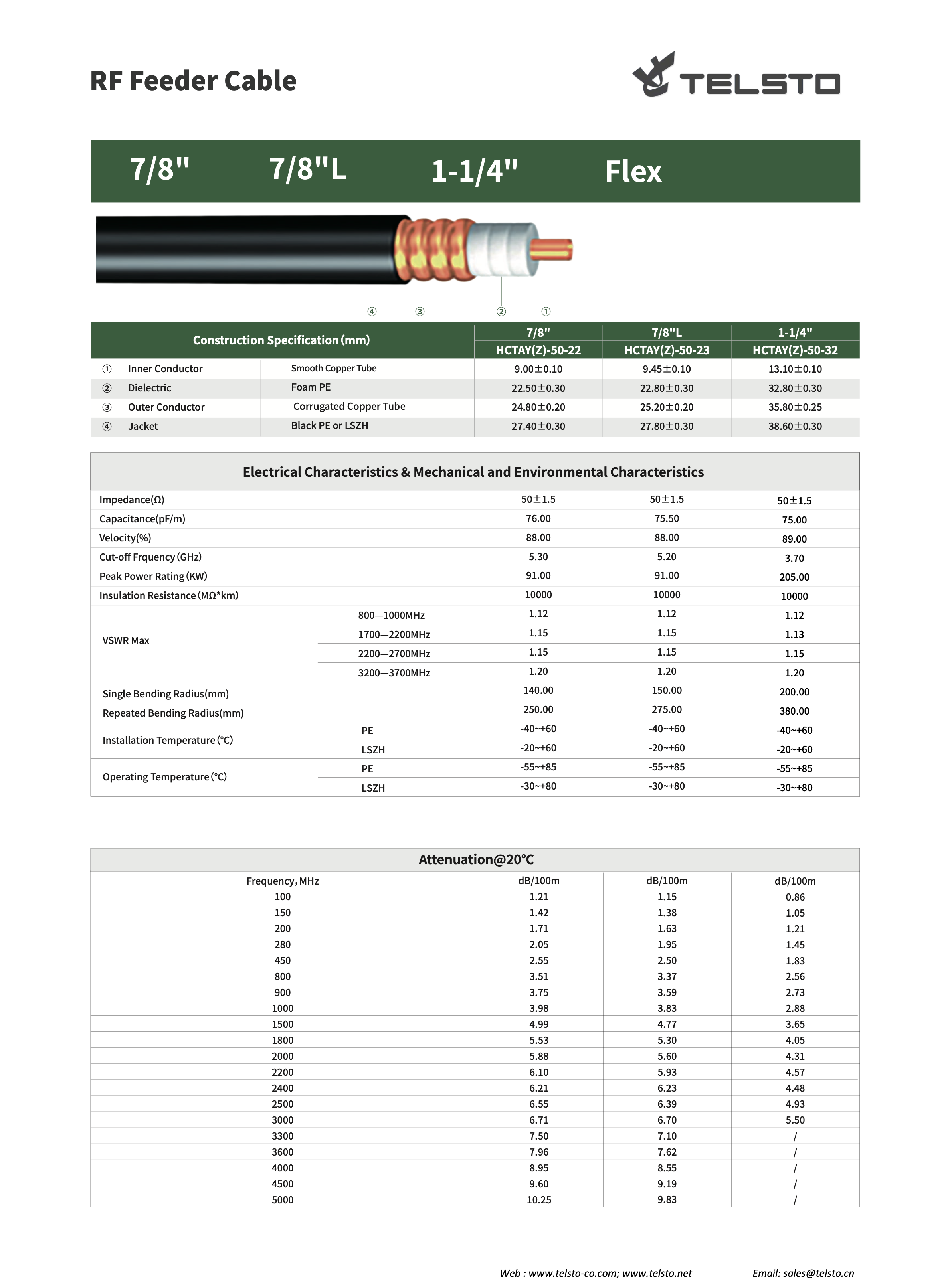
50ohm Coaxial Cable 78 78L 1-14 Flex
Key Features & Construction
-
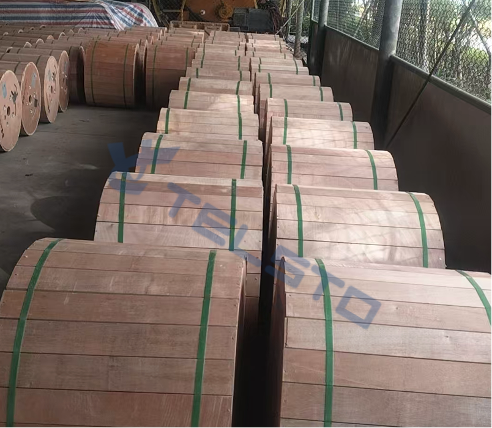
Optimized for Low Loss: Larger diameters, such as 7/8″, 1-1/4″, and 1-5/8″, feature a high-performance foam polyethylene dielectric that significantly reduces signal attenuation over long runs, making them ideal for tower feeder applications.
-
Superior Flexibility Option: The 1/2″ Superflex variant utilizes a specialized design with a more pliable dielectric and conductor, offering exceptional bend radius and ease of installation in tight spaces without compromising the electrical performance of standard 1/2″ cable.
-
Robust Shielding: All cables employ a combination of a corrugated copper or aluminum outer conductor, which provides excellent shielding effectiveness, mechanical strength, and environmental sealing against moisture ingress.
-
Durable Outer Jacket: The cables are typically sheathed in UV-stabilized, black polyethylene (PE) for superior outdoor durability and resistance to sunlight, extreme temperatures, and abrasion.
-
High Power Handling: The larger conductor and dielectric diameters of the 7/8″ and above sizes allow for significantly higher average and peak power ratings compared to smaller cables like 1/2″, supporting high-power transmitters.
Primary Applications
-
Macro Cell Sites: As the main feeder line from the base station radio to the antenna.
-
In-Building DAS: For distributing signal throughout large venues (standard 1/2″ and Superflex are common here).
-
Broadcast FM/TV Transmitters: For high-power transmission lines.
-
Public Safety and Land Mobile Radio (LMR) Systems: Connecting repeaters to high-gain antennas.
-
Microwave and Satellite Communication Links.
Write your message here and send it to us