 Email: sales@telsto.cn
 Telephone: 86-021-6221 2832
 LinkedIn
 Youtube
A 4.3-10 to N Type RF Adapter bridges two essential connector types in telecom networks. Reliable rf connectivity ensures strong signal amplification and network uptime. Telsto’s 4.3-10 Male Connector for 1/2” flexible rf cable delivers durable performance for critical rf links. Key rf metrics drive telecom quality:
- Consistent rf output power supports clear communication.
- High rf gain preserves signal strength.
- Low rf noise figure maintains network integrity.
Key Takeaways
- The 4.3-10 connector is ideal for modern LTE and 5G networks due to its smaller size, low passive intermodulation (PIM), and easy installation.
- Choosing a high-quality 4.3-10 to N type RF adapter ensures reliable signal transmission and minimizes maintenance costs in telecom networks.
- Proper installation of RF adapters, including checking connector compatibility and applying weatherproofing, is crucial for maintaining signal quality and system reliability.
4.3-10 Connector vs N Type in Telecom
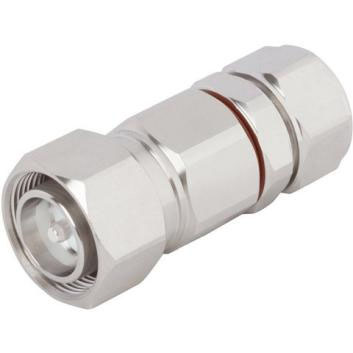
4.3-10 Connector Features
The 4.3-10 connector stands out in rf applications due to its advanced engineering and material quality. Telsto’s 4.3-10 Male Connector for 1/2” flexible rf cable uses a brass center contact with silver plating and a PTFE insulator. The body and outer conductor are made from a brass alloy with tri-alloy plating. This connector maintains a 50 Ohm impedance and operates from DC to 3 GHz. It offers insulation resistance of at least 5000MΩ and dielectric strength of 2500 V rms. The insertion loss is less than 0.1dB at 3GHz, and the VSWR is less than 1.1 at -3.0GHz. The connector is rated IP67 for waterproofing and functions reliably between -40°C and 85°C.
The 4.3-10 connector is smaller and lighter than legacy connectors. It is designed to minimize passive intermodulation, which is critical for rf signal integrity in modern wireless networks. The separation of electrical and mechanical components reduces interference. Installation is straightforward, with push-pull or hand-screw options that speed up deployment and reduce errors.
Telsto’s 4.3-10 connector delivers high performance, durability, and ease of installation, making it ideal for demanding rf environments.
N Type Connector Features
The N type connector has a long history in rf networks. It is known for its robustness and versatility. The connector supports a 50 Ohm impedance and operates from DC to 11 GHz. It is rated IP65 for environmental protection. The VSWR for straight types is less than or equal to 1.3:1, and for right-angle types, less than or equal to 1.5:1. Insulation resistance is at least 5000 MΩ. The connector withstands temperatures from -55°C to +155°C. It meets MIL-STD-202 standards for vibration and corrosion resistance. Coupling uses a 5/8-24 UNEF thread, and durability is rated for at least 500 mating cycles.
| Specification | Value |
|---|---|
| Impedance | 50 Ohm |
| Frequency Range | DC to 11 GHz |
| IP Rating | IP65 |
| VSWR | Straight ≤ 1.3:1; Right-angle ≤ 1.5:1 |
| Insulation Resistance | ≥ 5000 MΩ |
| Temperature Range | -55°C to +155°C |
| Vibration | MIL-STD-202 Meth. 204 |
| Corrosion Resistance | MIL-STD-202 Meth. 101 |
| Coupling | 5/8-24 UNEF Thread |
| Durability (Mating) | ≥ 500 Cycles |
The N type connector is valued for its durability and cost-effectiveness. It is widely used in legacy and medium-power rf applications. Installation requires threaded coupling, which can be slower and prone to under-torque if not handled carefully.
Role in RF Networks
Both the 4.3-10 connector and N type connector play important roles in rf networks. The 4.3-10 connector is preferred for LTE and 5G networks. Its smaller size and lighter weight allow for higher port density and easier installation. The connector’s low PIM performance ensures signal quality, which is essential for advanced telecommunications systems. It handles over 500W at 2GHz, making it suitable for high-power applications like 5G macro stations.
The N type connector remains a reliable choice for legacy and medium-power rf applications. It is robust and cost-effective, with abundant spare parts available worldwide. Its versatility supports efficient signal transfer in telecommunications.
- The 4.3-10 connector is replacing older standards such as the 7/16 DIN connector. It addresses the need for improved performance and easier installation in modern rf networks.
- The N type connector continues to serve legacy systems, offering durability and affordability.
Industry trends show a shift toward the 4.3-10 connector due to its smaller footprint, reduced torque requirements, improved PIM performance, and universal support for various couplings.
| Factor | 4.3-10 Connector | N-Type Connector |
|---|---|---|
| Unit Price | Medium-High | Low-Medium |
| Install Speed | Fast (push-pull / hand-screw) | Slower (threaded only) |
| Maintenance | Easy, fewer errors | Robust but easy to under-torque |
| Spare Parts | Readily available, newer | Abundant worldwide, legacy |
| Lifecycle Value | Strong for LTE/5G | Strong for legacy/medium-power |
| Connector Type | Power Handling Capability | Frequency | Application Use Case |
|---|---|---|---|
| 4.3-10 | Over 500W | 2GHz | High-power applications like 5G macro stations |
| N-type | Lower capability | Varies | General applications with heat management issues |
- The 4.3-10 connector is smaller, lighter, and more reliable, making it suitable for space and weight-sensitive rf applications.
- The N type connector is recognized for its robustness and versatility, contributing to efficient signal transfer in rf telecommunications.
Telecom professionals select the 4.3-10 connector for new LTE and 5G deployments. They value its high port density, low PIM performance, and easy maintenance. The N type connector remains a practical choice for legacy systems and medium-power rf applications.
The rf adapter that bridges the 4.3-10 connector and N type connector enables seamless integration between new and existing rf infrastructure. This adapter supports reliable connectivity, maintains signal integrity, and simplifies upgrades in telecom networks.
4.3-10 to N Type RF Adapter Benefits & Selection
Performance & Reliability
The 4.3-10 to n type rf adapter plays a critical role in maintaining high rf performance across modern telecom infrastructure. This adapter ensures seamless connectivity between the 4.3-10 connector and the n type connector, supporting both legacy and next-generation rf systems. Low passive intermodulation (PIM) is essential for signal integrity, especially in multi-carrier infrastructure and telecommunications and 5g networks. The adapter’s low PIM rating of -168 dBc at 1800 MHz and a VSWR of 1.2:1 max help prevent unwanted signal mixing and interference.
| Feature | Specification |
|---|---|
| Frequency Range | DC to 6.0 GHz |
| VSWR | 1.2:1 max |
| Impedance | 50 Ohms |
| PIM | -168 dBc (at 1800 MHz, 43dBm) |
Telsto’s 4.3-10 to n type rf adapter uses high-quality materials such as brass with silver plating for the center contact and a robust PTFE insulator. These materials provide excellent conductivity and corrosion resistance, which are vital for long-term field performance. The adapter’s insulation resistance of ≥5000MΩ and VSWR values as low as ≤1.10 up to 2.2 GHz ensure minimal signal loss and stable rf transmission.
| Characteristic | Value |
|---|---|
| Insulation Resistance | ≥5000MΩ |
| VSWR (DC-2.2GHz) | ≤1.10 |
| VSWR (2.2-3GHz) | ≤1.15 |
| VSWR (3.0GHz) | ≤1.1 |
Weatherproofing and sealing are essential for outdoor rf adapter applications. The IP67 rating protects against dust and water ingress, making the adapter suitable for harsh environments. Outdoor sealing and weather-rated solutions ensure the adapter maintains performance even during extreme weather events. Telsto’s design supports both indoor and outdoor sealing, providing reliable rf connectivity for all types of coaxial installations.
Tip: Choosing a 4.3-10 to n type rf adapter with low PIM, high insulation resistance, and robust weatherproofing ensures consistent rf performance and reduces maintenance costs.
Choosing the Right RF Adapter
Selecting the correct 4.3-10 to n type rf adapter is crucial for optimal rf system operation. Telecom professionals should evaluate several criteria to ensure compatibility and long-term reliability.
| Criteria | Description |
|---|---|
| Connector Durability | Assess the number of mating cycles the adapter can withstand without performance loss. |
| Polarity | Confirm correct gender and polarity to avoid connection errors. |
| Compatibility | Ensure the adapter meets industry standards and matches the cable type for the application. |
| Cost | Balance the need for high performance with budget considerations. |
| Environmental Conditions | Select adapters with appropriate waterproof ratings and temperature ranges for the deployment site. |
Premium brands like Telsto offer enhanced durability, which leads to lower maintenance costs over time. Their adapters feature silver-plated contacts and white bronze-plated bodies, providing high conductivity and corrosion resistance. IP67 compliance guarantees protection against dust and water, supporting long-term use in outdoor rf adapter applications. These features make Telsto’s custom rf adapter solutions a smart investment for telecommunications networks.
Note: Always verify that the coaxial adapter matches the required frequency range and power handling for your rf system.
Installation Tips
Proper installation of a 4.3-10 to n type rf adapter is essential for maintaining rf signal quality and system reliability. Follow these best practices for successful deployment:
- 1 Inspect all coaxial connectors and cables for damage or contamination before assembly.
- 2 Use the correct torque settings to ensure secure sealing and prevent over-tightening.
- 3 Apply weatherproofing measures, such as sealing tape or boots, for outdoor installations.
- 4 Confirm that the adapter’s gender and polarity match the system requirements.
- 5 Test the rf adapter after installation to verify low VSWR and PIM performance.
Pro Tip: Clean all mating surfaces before connecting the adapter to minimize the risk of PIM and ensure optimal rf performance.
Custom rf adapter solutions from Telsto include clear installation instructions and support for a wide range of coaxial cable types. This flexibility simplifies the integration of new adapters into existing rf infrastructure.
Common Challenges
Field deployment of 4.3-10 to n type rf adapters can present several challenges. Awareness of these issues helps prevent costly mistakes and ensures reliable rf operation.
- Selecting the wrong connector type or gender can disrupt system functionality.
- Incorrect cable length, whether too long or too short, can impact signal quality and installation efficiency.
- PIM performance concerns may arise if connectors are not properly cleaned or tightened, leading to degraded system sensitivity.
- Diagnosing PIM issues after installation can be difficult and time-consuming.
Environmental factors also play a significant role in adapter longevity. Connectors must be waterproof to prevent moisture ingress, and corrosion-resistant materials are necessary for outdoor sealing. Mechanical stress from wind or vibration can cause failures if the adapter is not properly secured.
Reminder: Regular inspection and maintenance of all rf adapters in your network help maintain high field performance and prevent unexpected downtime.
The 4.3-10 to n type rf adapter remains a cornerstone of modern rf adapter applications, supporting both legacy and advanced telecommunications systems. By prioritizing quality, weatherproofing, and proper sealing, telecom professionals can ensure robust and reliable rf connectivity for years to come.
4.3-10 to N type rf adapters support reliable telecom networks by ensuring strong rf signal transmission. Choosing a high-quality connector, like Telsto’s, helps maintain low-loss rf performance. Technical specifications such as PIM, shielding, and temperature range guide rf professionals in selecting the right connector for every application.
FAQ
What is an rf adapter and why is it important in telecom networks?
An rf adapter connects different connector types, ensuring reliable signal transmission. Telecom networks depend on rf adapter performance for strong connectivity and minimal signal loss.
How do I select the right rf adapter for my installation?
Check connector compatibility, frequency range, and environmental ratings. Choose an adapter that meets your system requirements and supports both indoor and outdoor applications.
Can an rf adapter improve signal integrity in harsh environments?
Yes. An rf adapter with IP67 waterproofing and high insulation resistance protects connections. This adapter maintains signal integrity during extreme weather and outdoor deployments.
Tip: Always inspect the rf adapter before installation to prevent performance issues.
Feature Benefit IP67 Rating Waterproof protection Low PIM Enhanced signal integrity Durable Build Long-lasting performance
Post time: Jul-29-2026


